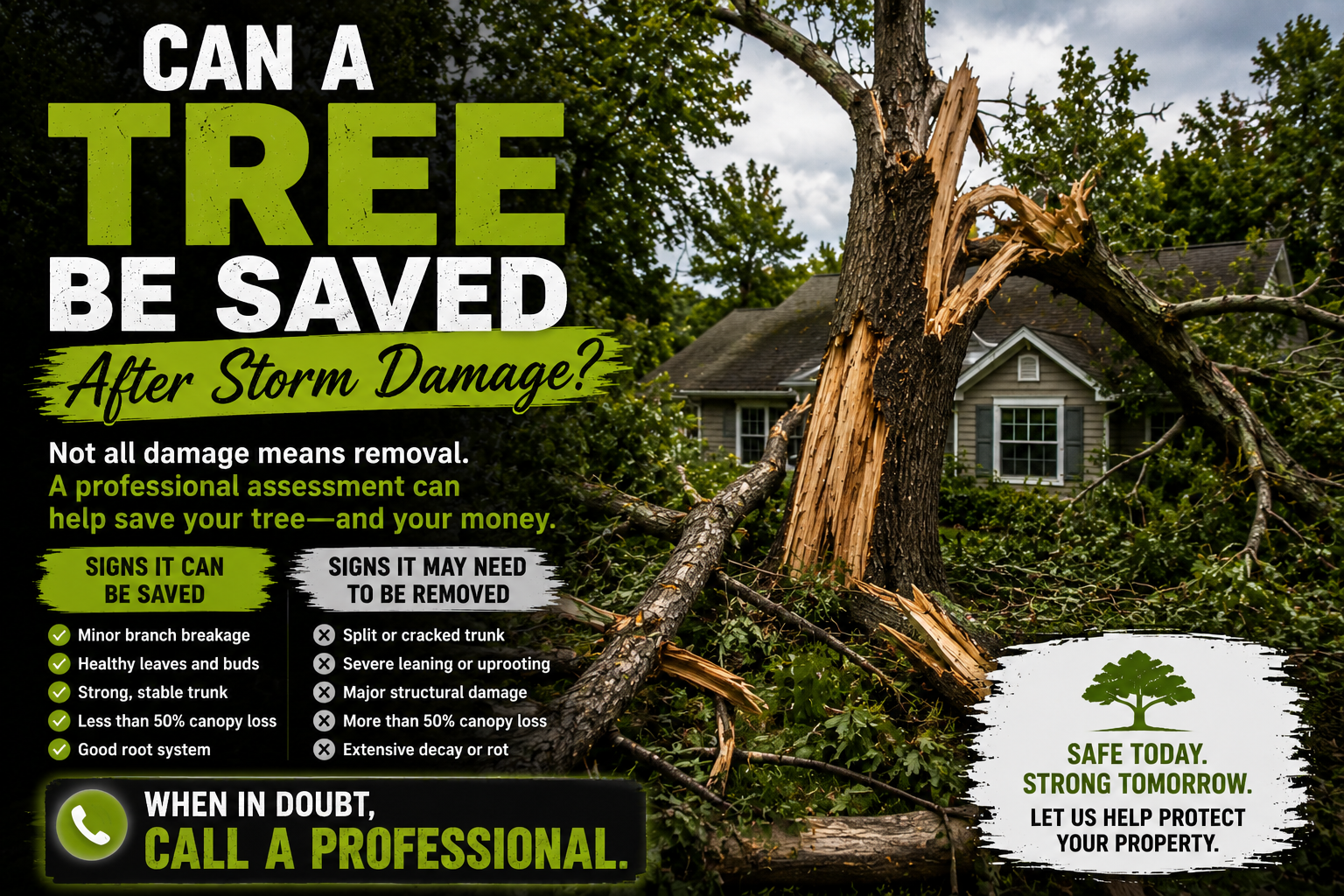
Severe storms can leave behind a trail of destruction, especially when it comes to trees. High winds, heavy rain, lightning, and falling debris can cause broken limbs, split trunks, leaning trees, and major structural damage. After a storm passes, many property owners are left asking the same question: Can the tree be saved, or does it need to be removed?
The answer depends on the type and severity of the damage. In some cases, a tree can fully recover with proper care and professional attention. In other situations, the safest option may be complete removal.
At E-Z Out Tree Service, we help homeowners and businesses throughout north metro Atlanta assess storm-damaged trees and determine the safest and most effective solution.
Not All Storm-Damaged Trees Need Removal
It is important to understand that visible storm damage does not automatically mean a tree is beyond saving.
Many trees can recover from:
- Broken branches
- Minor trunk damage
- Partial canopy loss
- Small cracks
- Light leaning
- Surface wounds
Healthy trees are often surprisingly resilient when given proper pruning, maintenance, and time to heal.
However, some storm damage creates serious structural weaknesses that can make a tree dangerous long after the storm has passed.
Signs a Tree May Be Saved
Damage Is Limited to Smaller Branches
If the majority of the damage involves smaller limbs or branches, the tree may recover well after professional pruning and cleanup.
Removing broken branches properly helps:
- Prevent decay
- Encourage healthy regrowth
- Improve tree structure
- Reduce future hazards
The Main Trunk Is Still Strong
Trees have a much better chance of survival when the main trunk remains intact and structurally sound.
Minor bark damage or shallow wounds may heal over time, especially in otherwise healthy trees.
Less Than 50 Percent of the Canopy Is Lost
Trees that lose less than half of their canopy often recover successfully with proper care. Leaves and branches are essential for energy production, so the amount of canopy loss is an important factor.
The Tree Was Healthy Before the Storm
Healthy trees generally recover better than trees already weakened by disease, decay, pests, or poor root systems.
A strong root system greatly improves the likelihood of survival after storm damage.
The Tree Is Not Leaning Severely
A slight lean after a storm does not always require removal. Some trees can stabilize naturally or be supported through corrective measures.
However, sudden or severe leaning should always be professionally evaluated immediately.
Signs a Tree May Need to Be Removed
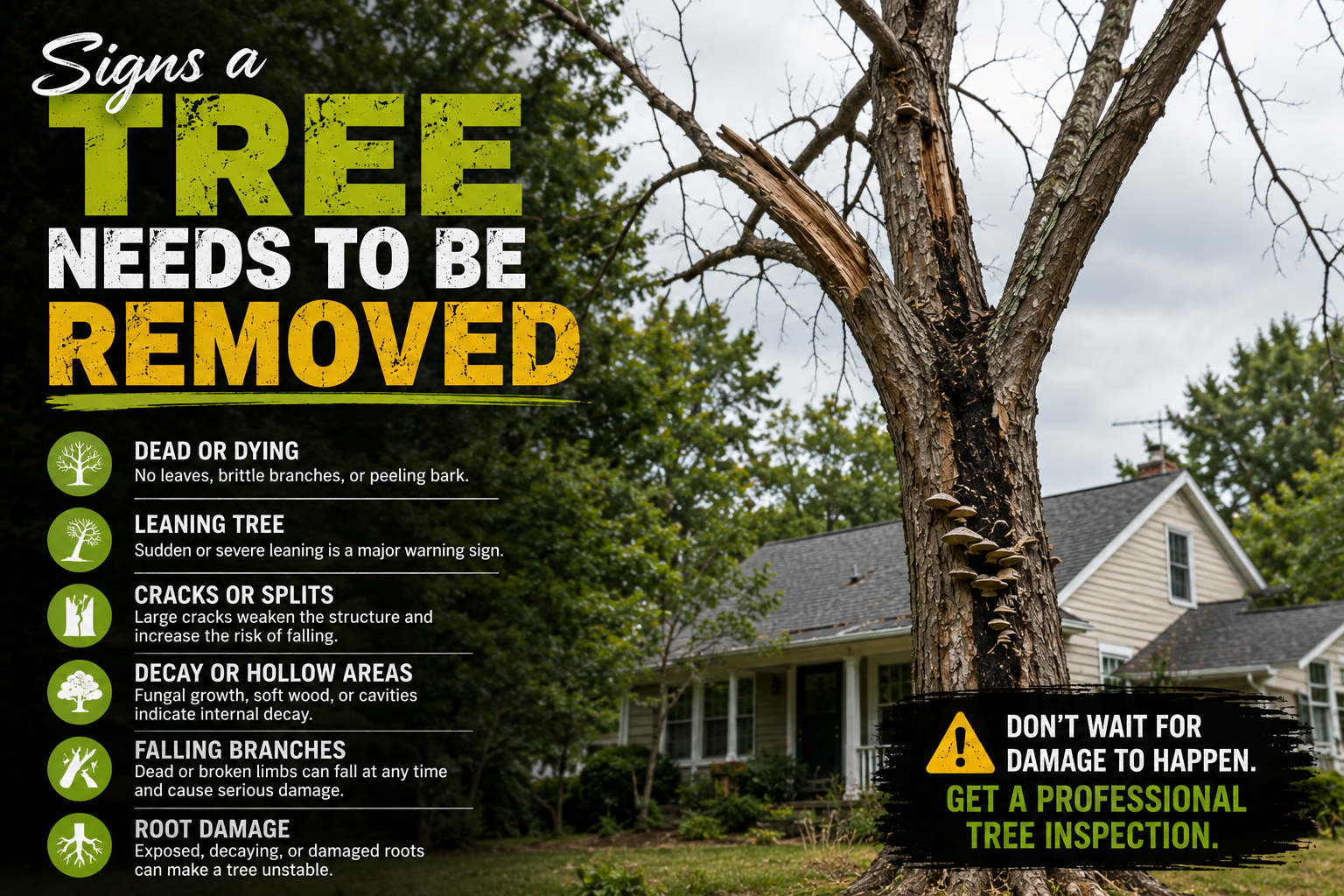
The Trunk Is Split or Severely Cracked
Large vertical cracks or split trunks often indicate major structural failure. Trees with severe trunk damage are more likely to collapse during future storms.
More Than Half the Tree Is Destroyed
When a large portion of the canopy or major structural limbs are lost, the tree may not have enough energy reserves to survive.
The Tree Is Uprooted or Leaning Dangerously
Trees that have partially uprooted or shifted significantly may have extensive root damage. Root instability creates major safety concerns.
Large Limbs Have Broken Near the Base
When large limbs tear away from the trunk, they often leave deep wounds that expose the tree to disease and decay.
The Tree Is Near Structures or Power Lines
Even if recovery is possible, some storm-damaged trees may still pose too much risk due to their location near:
- Homes
- Vehicles
- Driveways
- Utility lines
- Sidewalks
- Commercial buildings
Safety should always come first.
Why Professional Tree Inspections Matter
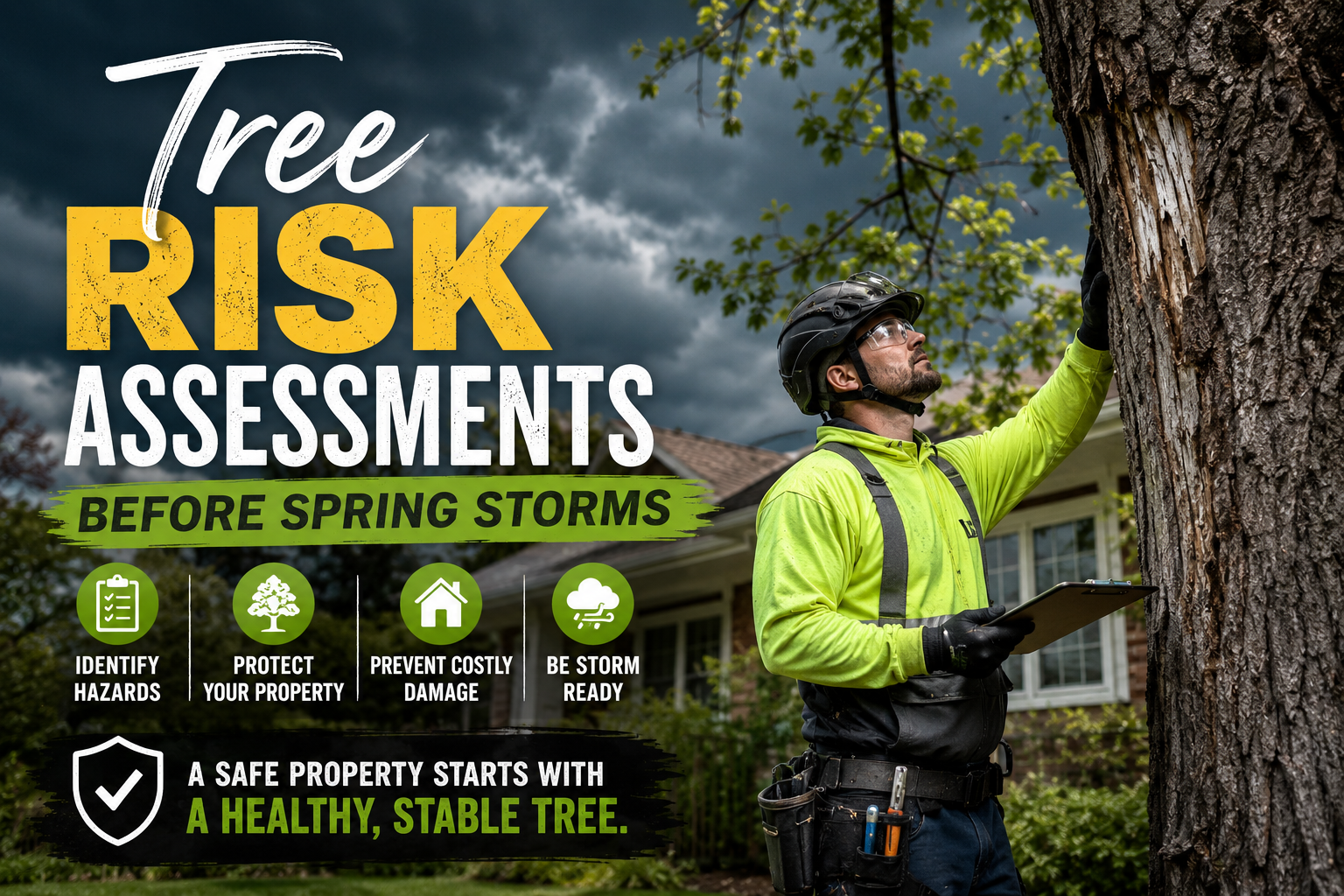
Storm damage is not always easy to evaluate from the ground. Some structural problems may be hidden internally or located high within the canopy.
Professional tree service companies and arborists can assess:
- Structural stability
- Root condition
- Internal decay
- Risk of future failure
- Overall tree health
- Long-term safety concerns
At E-Z Out Tree Service, we provide thorough storm damage evaluations to help property owners make informed decisions about their trees.
Avoid DIY Storm Cleanup
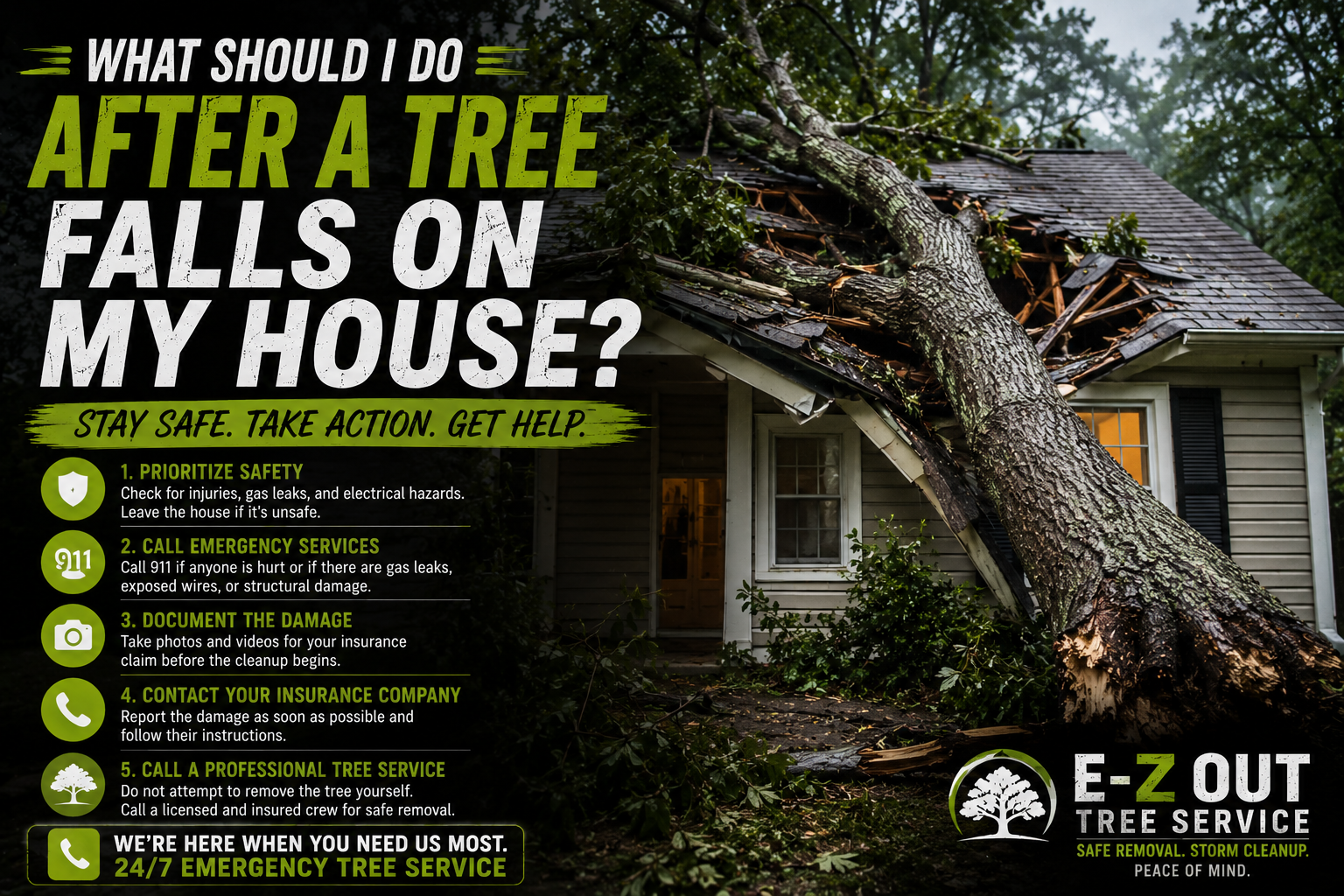
Storm-damaged trees can be extremely dangerous. Broken limbs may still be under tension, and weakened trees can fail unexpectedly during cleanup attempts.
Trying to remove limbs or cut damaged trees without proper equipment and experience can lead to serious injuries.
Professional crews have:
- Safety equipment
- Climbing gear
- Chainsaws and rigging systems
- Cranes and spider lifts
- Training to safely remove hazardous limbs and trees
Fast Action Can Prevent Additional Damage
After a storm, it is important to address damaged trees quickly before conditions worsen. Cracked limbs, weakened trunks, and unstable trees may fail days or even weeks later.
Prompt inspections and cleanup help reduce the risk of:
- Additional property damage
- Injuries
- Pest infestations
- Tree disease
- Emergency situations
Professional Storm Damage Tree Services in North Metro Atlanta
If your property has experienced storm damage, the team at E-Z Out Tree Service is ready to help. We provide emergency tree services, storm cleanup, hazardous tree removal, tree trimming, and professional tree assessments throughout Gwinnett County, Barrow County, and surrounding north metro Atlanta communities.
Whether your tree can be saved or needs to be removed, our experienced team can safely evaluate the damage and recommend the best solution for your property.
Contact us today for professional storm-damaged tree services and expert tree care after severe weather.