Each year in the United States, falling trees and large tree limbs cause serious property damage, injuries, and even fatalities. In many situations, hazardous trees are linked to neglected property maintenance, which can potentially expose property owners to liability concerns. Taking proactive steps to maintain and inspect trees—especially after severe weather or flooding—is essential for protecting both your property and the people around it.
How Flooding Affects Trees
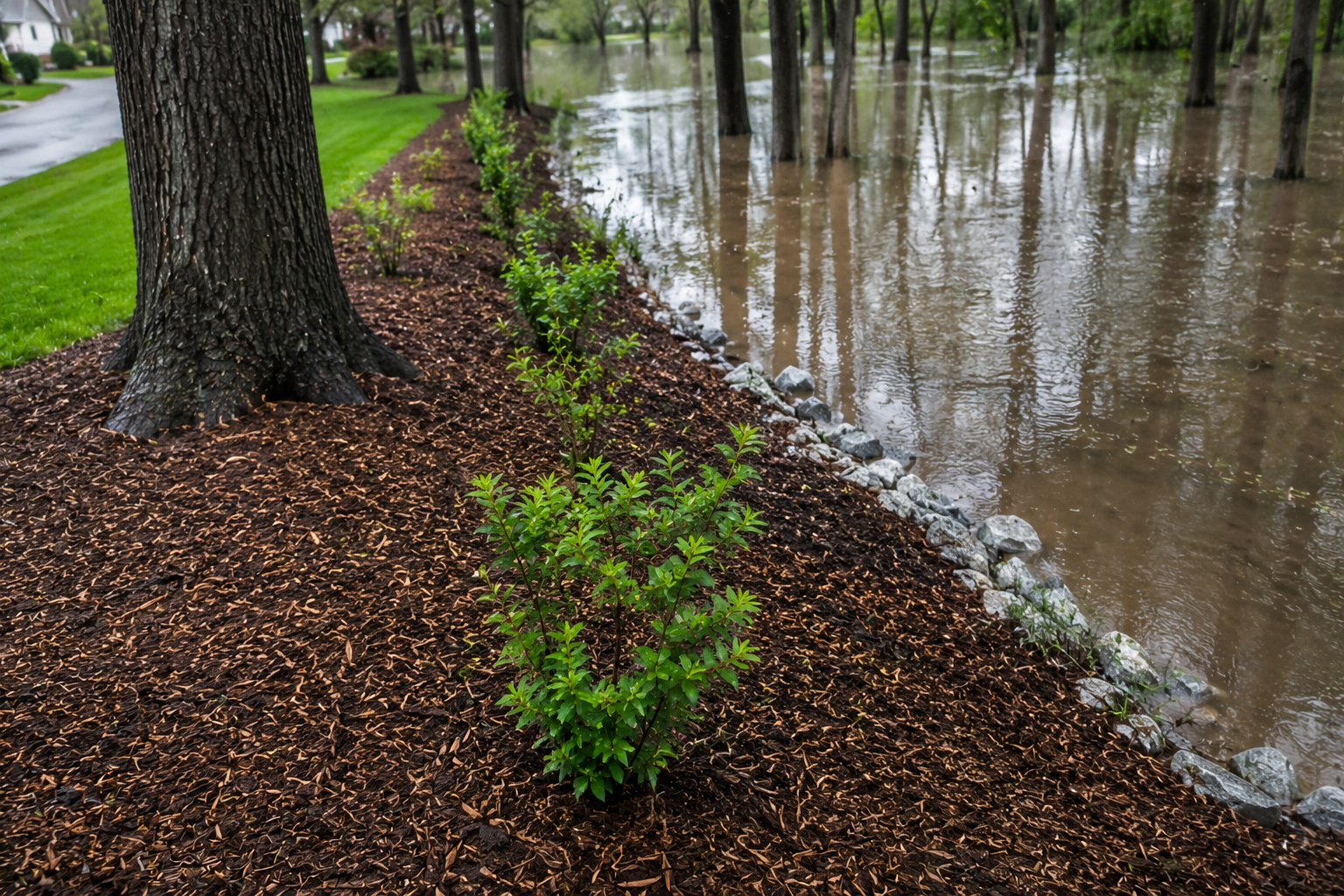
Flooding can have a significant impact on the health and structural stability of trees. Excessive water from heavy rainfall, rising rivers, storm runoff, or broken water lines can saturate the soil surrounding a tree’s root system. When roots remain submerged for extended periods, oxygen levels in the soil become depleted, causing stress, toxin buildup, root deterioration, and eventually tree decline.
The longer a tree remains waterlogged, the greater the risk of permanent damage. In many cases, root loss may begin within hours or days after flooding occurs. Over time, weakened root systems can compromise the structural integrity of the tree, increasing the likelihood of falling limbs or complete tree failure.
Flood conditions can also encourage the growth of harmful fungi, bacteria, pests, and parasites that attack stressed trees. These conditions often lead to decay, disease, root rot, and long-term health problems that may not become visible for months after the flood event.
Even trees that appear healthy after flooding may still be structurally compromised beneath the surface.
Additional Risks Caused by Flooding
Flood-related soil erosion and root instability can significantly weaken a tree’s foundation. Soil shifting, root decay, and grade changes around the base of the tree may eventually cause the tree to lean, split, or fall unexpectedly.
Trees stressed by flood damage are also more vulnerable to:
- Insect infestations
- Root disease
- Fungal growth
- Internal decay
- Structural instability
- Drought stress after flooding subsides
Because many of these issues develop gradually, professional tree inspections are strongly recommended following any major flooding event.
Factors That Influence Flood Damage to Trees
The severity of flood damage depends on several important factors, including:
- Time of year flooding occurs
- Duration of flooding
- Water depth
- Water quality
- Air and soil temperature
- Oxygen levels in the water
- Tree species and age
- Existing tree health and root structure
Flooding during the active growing season is often far more damaging than flooding during dormancy, especially when temperatures are high. Warm temperatures accelerate oxygen depletion in saturated soil, placing additional stress on already weakened trees.
What to Do After Flooding
Although some trees can recover from temporary flooding, others may suffer hidden structural damage that makes them hazardous long after the water recedes. In many cases, symptoms of decline may take weeks or months to appear.
Trees that survive flooding should be professionally inspected to evaluate:
- Root stability
- Structural integrity
- Soil erosion
- Limb damage
- Signs of disease or decay
- Potential safety hazards
Even if a tree shows no immediate signs of distress, underlying damage may still exist. Early detection and treatment can often help preserve the health of the tree and reduce future risks.
Protect Your Property with Professional Tree Inspections
At E-Z Out Tree Service, we recommend having your trees inspected as soon as possible after major flooding or severe storms. Our experienced arborists and tree professionals can assess the condition of your trees, identify potential hazards, and recommend the safest course of action.
Depending on the condition of the tree, solutions may include:
- Tree pruning
- Structural support
- Soil aeration
- Grade correction
- Hazard mitigation
- Tree removal if necessary
For more than 30 years, E-Z Out Tree Service has proudly served homeowners and businesses throughout northeast Georgia, including:
- Lawrenceville
- Lilburn
- Dacula
- Buford
- Bethlehem
- Northeast Georgia communities
Our trained and certified arborists are available 24/7 to help evaluate hazardous trees and provide professional tree care solutions following flooding or storm damage.
We’re Here to Help
At E-Z Out Tree Service, we understand that flood-damaged trees can pose serious risks to your home, business, and family. Our experienced crews have the equipment, training, and expertise needed to safely prune, stabilize, or remove dangerous trees while protecting your property throughout the process.
We also take pride in providing thorough cleanup services and leaving your property clean and safe after every project.
If you would like to learn more about how flooding can impact the health and stability of your trees, contact E-Z Out Tree Service today at 770-822-9843. Even if you are simply looking for professional guidance or an expert opinion, our team would be happy to assist you.
